
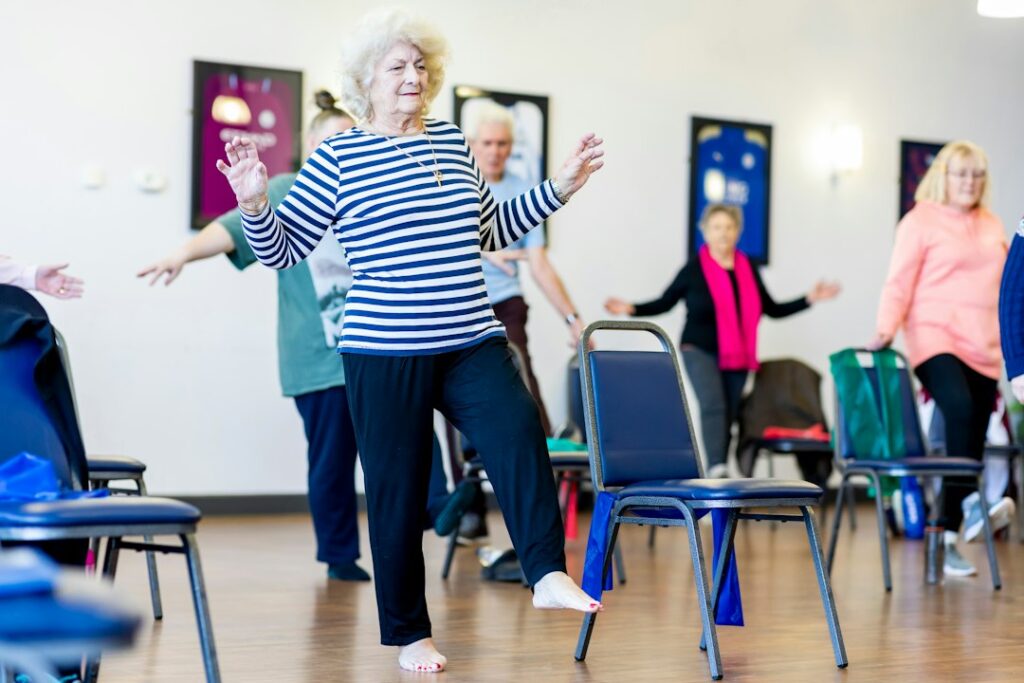
Residents and families in Clearfield, PA may hear the term “integrative therapies” used in discussions about assisted living. These approaches generally combine standard medical and personal care with supportive practices that address comfort, movement, mood, social connection, sleep, and daily quality of life.
Integrative therapies are not meant to replace prescribed treatment. In a well-managed assisted living setting, they are added carefully, based on a resident’s preferences, health history, abilities, and care plan.
What are integrative therapies in assisted living?
Integrative therapies are supportive activities or services used alongside conventional medical care. They may include movement programs, music, massage, relaxation exercises, creative activities, therapeutic gardening, or selected mind-body practices.
The word “integrative” matters because the goal is coordination. A therapy should fit with the resident’s medications, medical conditions, mobility level, cognitive status, and personal goals.
Examples may include:
- Guided stretching, chair yoga, or balance exercises
- Music listening, singing, rhythm activities, or individualized playlists
- Art, crafts, journaling, and other creative activities
- Gentle massage or hand massage, when appropriate
- Breathing exercises, meditation, or guided relaxation
- Aromatherapy using carefully selected scents
- Time outdoors, gardening, or nature-based activities
- Pet-assisted activities involving trained animals
- Non-drug approaches for comfort, sleep, anxiety, or social engagement
Availability varies. Pennsylvania assisted living residences and personal care homes must provide daily social and recreational activities, but each residence develops its own activity program and determines which additional approaches are suitable.
Are integrative therapies the same as alternative medicine?
No. Alternative medicine is generally used instead of conventional medical treatment. Integrative care uses supportive approaches together with standard medical services.
For example, a resident with arthritis may continue prescribed medication and receive physical therapy while also participating in gentle movement, warm hand activities, music, or relaxation exercises. These additions may support comfort and participation, but they do not cure arthritis or replace medical evaluation.
A useful question is whether the therapy supports the existing care plan rather than competing with it.
Which therapies may benefit older adults?
The potential benefit depends on the individual and the purpose of the activity. Integrative approaches may help some residents with comfort, stress, sleep, movement, communication, or social participation.
Music and memory support
Music can encourage participation and provide a familiar way to express emotion. Singing, percussion, or listening to meaningful songs may be especially useful for residents who have difficulty finding words or joining conversation.
Music should remain individualized. Loud group sessions may be enjoyable for some residents but overwhelming for others.
Gentle movement
Chair exercises, stretching, walking programs, and balance activities can support flexibility and confidence. They may also make it easier for residents to participate in meals, recreation, and personal routines.
Movement activities should be adjusted for conditions such as osteoporosis, joint replacement, dizziness, neuropathy, or a history of falls. A resident should not be expected to push through pain or shortness of breath.
Relaxation and breathing practices
Slow breathing, guided imagery, and quiet relaxation may help some residents manage tension or settle before sleep. These activities are usually low-cost and can be adapted for people who remain seated or have limited mobility.
A resident with significant anxiety, confusion, or breathing problems may need close supervision and a different approach.
Creative and nature-based activities
Painting, arranging flowers, planting seeds, folding fabric, or working with familiar household materials can provide purpose without requiring advanced artistic skill. Seasonal activities may be particularly meaningful in Clearfield, where cold weather and shorter winter days can limit outdoor time.
Indoor gardening, window plants, nature sounds, and well-lit common areas can help maintain a connection with outdoor routines when weather makes outdoor activity difficult.
Can integrative therapies help with dementia?
They may support comfort, communication, and engagement, but they do not stop or reverse dementia. Activities often work best when they are familiar, predictable, and matched to the resident’s current abilities.
Helpful adaptations may include:
- Using simple instructions and one step at a time
- Offering familiar music, photographs, or household objects
- Reducing background noise and visual clutter
- Allowing extra time for responses
- Focusing on participation rather than completing a task perfectly
- Watching for signs of fatigue, frustration, or overstimulation

A person with dementia may benefit from folding towels, sorting large objects, watering plants, or listening to music even when a more complex activity is no longer manageable.
Are supplements and herbal products safe for assisted living residents?
Not automatically. Herbal products, vitamins, teas, and other supplements can interact with prescription medicines or affect blood pressure, bleeding, blood sugar, alertness, or kidney function.
Residents and families should not add a supplement to a medication routine without reviewing it with the resident’s physician, pharmacist, or licensed nurse. This is especially important for people taking blood thinners, seizure medication, diabetes medication, sedatives, or multiple prescriptions.
A natural product is not necessarily a risk-free product. Assisted living staff should know about all supplements a resident uses so the information can be considered in the medication record and care plan.
How should a resident choose an appropriate therapy?
The best starting point is the resident’s goal. Someone may want less stiffness, better sleep, more social contact, less boredom, or a calmer morning routine. The therapy should be selected to address that goal in a realistic way.
Families can ask:
- What is the purpose of this activity?
- Who leads or supervises it?
- Can it be adapted for limited vision, hearing, mobility, or memory?
- What health conditions could make it unsuitable?
- How are preferences and results documented?
- Can the resident stop if the activity causes discomfort?
- Is the activity included in the regular program, or does it involve an additional charge?
- How does it fit with the resident’s support plan?
The resident’s choice matters. Participation should not be treated as proof of cooperation or refusal as a behavioral problem.
What safety concerns should families understand?
Integrative therapies can still create risks. Massage may be unsuitable over fragile skin, open wounds, recent surgical areas, or certain painful conditions. Aromatic products can trigger headaches, asthma symptoms, allergies, or nausea. Heat-based activities may be unsafe for people with reduced sensation or circulation problems.
Fall risk also deserves attention. A movement activity should use stable seating, clear walking paths, suitable footwear, and supervision when needed. Outdoor activities should account for ice, snow, heat, uneven ground, and changing daylight.
Staff should stop an activity and reassess if a resident develops pain, dizziness, unusual drowsiness, breathing difficulty, agitation, or a sudden change in behavior.
What should residents expect from a responsible program?
A responsible program treats integrative therapies as optional supports, not miracle treatments. Activities should be explained in plain language, adapted to individual abilities, and coordinated with medical care.
Residents should also expect respect for personal beliefs and preferences. Some people enjoy meditation or massage; others prefer prayer, reading, conversation, music, or quiet time. Whole-person care does not require everyone to use the same methods.
In Clearfield, seasonal conditions, transportation limitations, and the distance between households may affect how often families visit or how easily residents participate in community activities. A thoughtful program offers meaningful indoor options while preserving safe opportunities for outdoor time and family connection when conditions allow.
The most useful therapy is often the one a resident enjoys, can safely participate in, and can connect with as part of an ordinary daily routine.
